
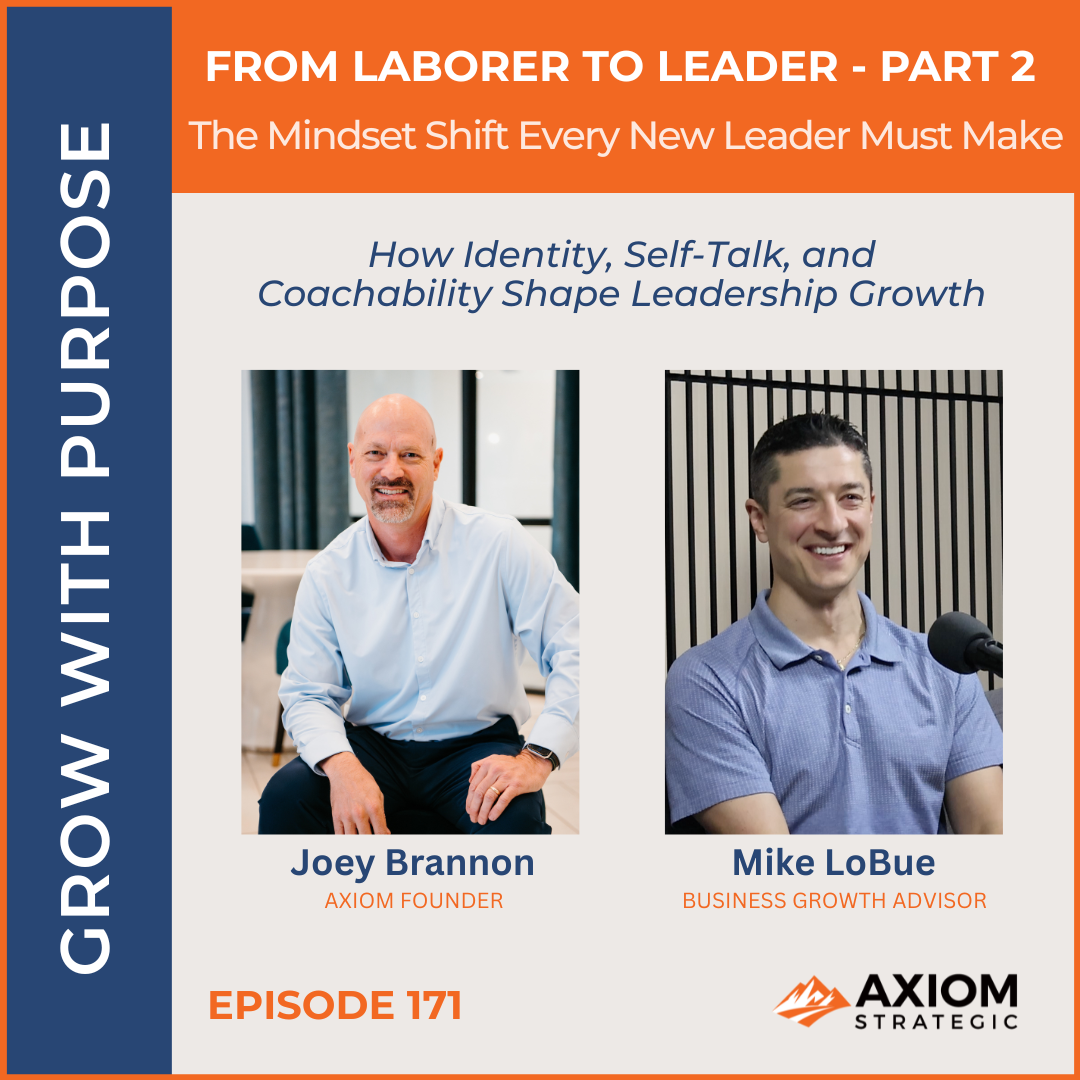
171: From Laborer to Leader - Part 2: The Mindset Shift Every New Leader Must Make
How Identity, Self-Talk, and Coachability Shape a Leader’s Ability to Grow — and Why Thinking Differently Comes Before Leading Differently
The Most Overlooked Part of Leadership Development
In Part 1, I talked about the cost of promoting without preparing. I’ve watched businesses lose momentum, owners step back into roles they were trying to hand off, and new leaders quietly go home feeling like they’re failing.
Once you see why that happens, the next question is unavoidable: Where does real leadership development actually begin?
Most owners want to jump straight to skills:
communication
delegation
accountability
decision-making
But here’s what experience has taught me: leadership doesn’t start with skills. It starts with identity.
Until someone begins to see themselves as a leader, everything else feels forced. That’s exactly where Mike LoBue and I continue the conversation in Part 2 of this series.
Leadership Starts With How You See Yourself
Leadership isn’t just a new role—it’s a fundamental identity shift.
When someone is promoted, their old identity is disrupted. They are no longer the "go-to technician" or the "top performer"; they are now expected to lead the people who used to be their peers. As we unpacked this transition, Mike captured the heart of the issue:
"They need to start thinking differently. They need to see themselves differently." — Mike LoBue
The Internal Tension of Growth
When the identity gap isn't addressed, confidence erodes and new leaders often retreat back into what feels safe. This creates a specific kind of internal friction:
Belonging: "Do I actually belong in this seat?"
Perception: "Do others truly see me as their leader?"
Capability: "Am I actually capable of handling this responsibility?"
Left unresolved, this tension quietly undermines leadership before it ever becomes visible.
The Owner’s Role: Making the Shift Visible
One of the biggest mistakes owners make is assuming a new leader intuitively understands what has changed. To be successful, you must make the shift explicit.
Mike described a framework that helps settle the "identity dust" almost immediately:
The Hand-off: Clearly define what their job was vs. what it is now
The Essentials: Identify which components of the old job are still necessary
The Mastery: Highlight the new leadership skills they need to master
When you walk someone through this clearly, they stop trying to do both jobs at once. They gain the permission they need to let go of the old and embrace the new.
Self-Talk Isn't "Soft"—It’s Strategic
Most leaders are talking to themselves all day long, but they aren’t doing it intentionally. Mike put it plainly: "Most of us aren’t talking to ourselves on purpose."
Internal language shapes external confidence. When leaders start reinforcing who they are becoming, their awareness changes.
"You cannot act consistently in a different way than you see yourself." — Mike LoBue
How Identity Shapes Focus
If you start saying to yourself, "I’m a great communicator," your brain begins to filter for that. You’ll start noticing videos, blogs, and books on communication that you previously ignored.
Identity shapes focus
Focus shapes behavior
Behavior shapes growth
Why Leadership Development Must Be Intentional
Leadership doesn’t develop by accident. If you leave it vague, people drift back into what they’re comfortable with.
Mike framed it in a way that aligns perfectly with how we approach this at Axiom: “Helping someone think differently… it’s a strategic process, and it needs to have measurable points along the way.”
That’s the difference between promoting someone and developing them.
Without clarity and structure, leaders default back to old habits — not because they’re failing, but because no one showed them a different path.
And growth also requires coachability — a willingness to be shaped, corrected, and developed over time.
Growth Takes Time — and That’s Not a Bad Thing
Leadership development isn’t fast. And it shouldn’t be.
Mike said it plainly: “Things take time. Everything good takes time.”
But I’ve also seen this: when leaders engage intentionally — reading, reflecting, asking questions, practicing conversations — growth accelerates.
They’re no longer waiting to be told what to do.
They’re choosing to grow.
Help Leaders See the Progress They Can’t See
One of the most important responsibilities owners have is helping leaders see how far they’ve come.
When discouragement creeps in, perspective matters.
This is something I’ve had to learn myself: “When I turn around and see the gains… that gives me the mental energy to read another chapter, listen to the podcast, pull the three-by-five cards back out.”
Progress fuels perseverance.
And leaders need someone helping them see it.
What’s Coming in Part 3
Up to this point, we’ve focused on the internal shift leaders must make.
In Part 3, we’ll move from identity to execution.
We’ll break down the disciplines — the habits, rhythms, and systems — that turn leadership mindset into consistent leadership behavior.
This is where leadership becomes visible and sustainable.
Equip Your Leaders for the Identity Shift
This moment is an invitation to move from awareness to action — helping leaders grow intentionally instead of accidentally.
Download the Leadership Guide for Part 2
A practical resource to help leaders navigate the identity shift required for sustainable growth.Share This Episode With Your Leadership Team
Create a shared language and alignment around leadership development.
Leadership development isn’t a luxury.
It’s the foundation of your future growth.
If this resonated, we’d love to walk with you as you build leaders with purpose — because leadership doesn’t grow by accident.
References and Downloadable Resources
Maxwell Maltz: Psycho-Cybernetics
Dan Sullivan and Dr. Benjamin Hardy: The Gap and the Gain
Episode 170: From Laborer to Leader — Part 1
Episode 171: Leadership Guide